
Legal Record Retention: What to Keep After a Case Closes
On this page
Quick answer
After a legal matter closes, keep the final agreement or order, filed documents, key correspondence, payment records, and a clear record of deadlines or continuing duties. Ask the lawyer in writing which originals to retain and for how long. Store the final set securely, separate it from drafts, and do not destroy anything connected to an appeal, audit, tax issue, lien, or later dispute.

APEX LAW FIRM, APC. / apex law firm apc
PasadenaLos Angeles CountyCalifornia
150 S Los Robles Ave suite 710, Pasadena, CA 91101, USA
Build a core matter file
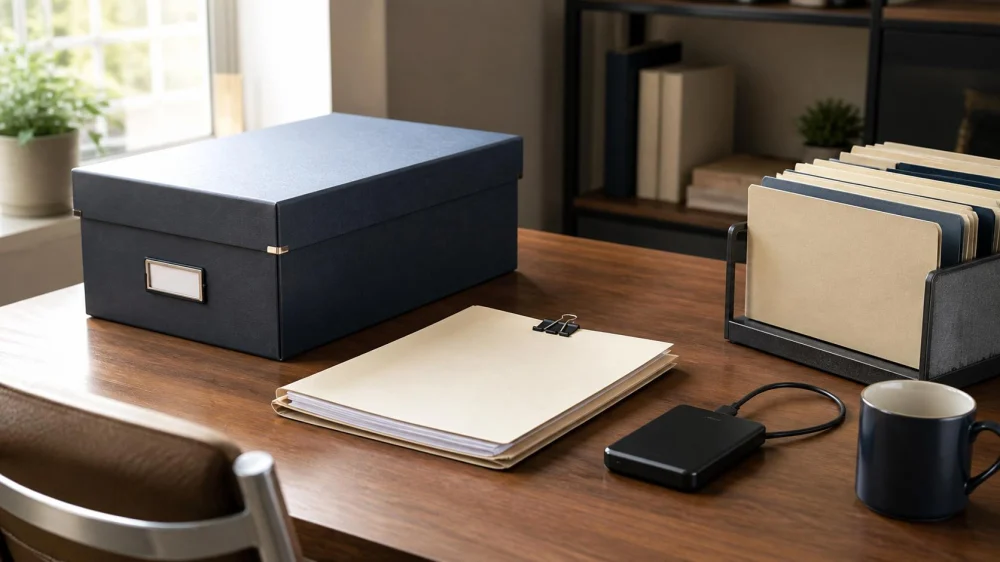
Legal record retention is the process of preserving documents that may prove what happened, what was agreed, and what obligations remain after a matter ends. The useful file is usually smaller than the working file, but it should be complete enough to explain the outcome.
For an individual or small business in the United States, a core file may include:
- the signed engagement and fee documents;
- final court orders, judgments, settlement agreements, releases, contracts, or closing papers;
- filed pleadings and proof that important filings were accepted;
- key letters or emails explaining advice, decisions, and the final result;
- invoices, receipts, trust-account statements, and proof of payment;
- evidence that must remain available, such as photographs, reports, or transaction records;
- a list of future deadlines, renewal dates, payment dates, reporting duties, or restrictions; and
- the lawyer's closing letter and any instructions about original documents.
Keep final and signed records apart from drafts. A file name such as 2026-08-18 Final Signed Settlement is more useful than new-final-v3. Do not rename an official court file in a way that hides its original source.

Quill & Arrow LLP / quill and arrow reviews
Los AngelesLos Angeles CountyCalifornia
10880 Wilshire Blvd Suite 1600, Los Angeles, CA 90024, USA
Use a practical retention process
- Confirm that the matter is actually closed. A settlement payment, appeal period, recording step, or administrative follow-up may still be pending.
- Request the closing inventory. Ask which originals belong to you, which records the firm will retain, and when the firm's copy may be destroyed.
- Identify continuing obligations. Add deadlines to a calendar with an earlier reminder and note who is responsible.
- Create a read-only final set. Save stable copies in commonly readable formats while preserving original electronic files when metadata or authenticity could matter.
- Keep two protected copies. Use separate, secure locations rather than two folders on the same device.
- Record the retention decision. Note the document group, planned review date, reason for keeping it, and person who approved disposal.
- Review before destruction. Check for a new claim, subpoena, audit, tax need, lien, warranty issue, or legal hold.
This process is best for organizing a completed matter. It is not ideal for deciding whether evidence may legally be destroyed during an active or reasonably expected dispute; that decision needs case-specific legal advice.
Decide how long to keep each record
There is no single United States retention period for every legal file. The correct period can depend on federal and state law, court rules, statutes of limitation, tax requirements, the document type, the client's age, contract terms, and the possibility of a later claim.
Use the longest applicable need, not the shortest convenient period. Consider these decision rules:
- Permanent or long-term rights: keep documents that establish ownership, boundaries, inheritance, releases, intellectual property, or obligations that continue for years.
- Tax or financial consequences: coordinate the legal file with advice from a qualified tax professional and the applicable government recordkeeping rules.
- Minors or delayed claims: obtain advice because limitation periods may start or pause differently.
- Judgments and settlements: retain proof of payment, satisfaction, releases, confidentiality terms, and any duties that survive closing.
- Business records: align legal retention with the company's documented policy, insurance requirements, regulatory duties, and litigation-hold process.
When rules conflict or the consequence of loss would be serious, ask the lawyer who handled the matter or another licensed lawyer in the relevant jurisdiction for a written recommendation.
Protect and dispose of sensitive files
Closed files can contain Social Security numbers, financial details, medical information, signatures, addresses, and confidential communications. Limit access to people with a genuine need, use strong account security, and encrypt portable devices or storage when available.
Before sharing a record, confirm the recipient and remove information they do not need. Do not assume that an ordinary email attachment or consumer file-sharing link is suitable for highly sensitive material.
When authorized destruction is appropriate, shred paper so it cannot be reconstructed and use a secure deletion method for electronic media. Simply moving a file to the trash may not remove recoverable copies, backups, synced versions, or email attachments. Keep a short destruction log, but do not list sensitive contents in unnecessary detail.
Limitations and important notes
- This article provides general organization guidance, not legal advice for a particular matter.
- Do not destroy records after receiving a subpoena, preservation notice, audit request, or litigation hold.
- If a dispute is reasonably expected, preserve potentially relevant paper, messages, files, device data, and metadata until a lawyer advises otherwise.
- A law firm's retention policy does not automatically determine how long a client should keep a personal copy.
- Cloud backup helps with loss prevention, but it does not replace access controls, readable formats, or a documented retention plan.
Frequently asked questions
Can I rely on my former lawyer to keep the entire file?
No. Firm policies and professional rules differ, and a firm may destroy eligible files after notice and a stated period. Request your own final set and ask what the firm will keep.
Should I keep drafts and duplicate emails?
Often the signed version and decision-making record matter most, but drafts can be relevant when meaning, negotiation history, authenticity, or professional advice is disputed. Ask before discarding them if that risk exists.
Are scanned copies as useful as paper originals?
Scans are convenient and may be acceptable for many purposes, but some original signed, notarized, recorded, sealed, or negotiable documents can have special value. Confirm before destroying an original.
What should I do if I cannot open an old file?
Preserve the original media and file, avoid repeated conversion attempts that overwrite it, and seek technical or legal help when authenticity or metadata may matter. For ordinary access, create a separate converted copy.
When should I contact a lawyer?
Get jurisdiction-specific advice before destroying evidence, when a deadline or continuing duty is unclear, when a claim may arise, or when losing a document could affect property, money, status, or legal rights.
Conclusion and next steps
Start with the final outcome documents, a written list of continuing duties, and the closing letter. Ask the responsible law office to identify originals and recommend retention periods for the specific matter. Then store a protected final set, schedule review dates, and pause any destruction as soon as a dispute, audit, or preservation duty appears.
Evidence note: These recommendations reflect common legal-records management and information-security practices. Exact duties come from the applicable law, court or agency rules, contracts, professional guidance, and case-specific instructions.





 KB Law PLLC4.0 (118 reviews)
 Edward F. Whipps & Associates3.0 (7 reviews)
 The Law Offices of Millon & Peskin, Ltd.5.0 (36 reviews)
 Lombardi and Lombardi, P.A.0.0 (0 reviews)
 Kaplan & Grant, Attorneys at Law4.0 (26 reviews)
 Defense Tax Partners - Tax Attorney, IRS Tax Relief & Audit Defense, Free Consultation4.0 (52 reviews)
 How to Legally Navigate Contract Disputes in the Construction Industry
 How to File for Divorce Without a Lawyer: A Complete Guide
 Limited-Scope Legal Services: Define Every Task and Deadline
 What to Know Legally About Sharing Economy Platforms and Host Liability
 What to Know Legally About Liability When Using Shared Electric Scooters
 How to File for Divorce Without a Lawyer – A Step-by-Step Guide