
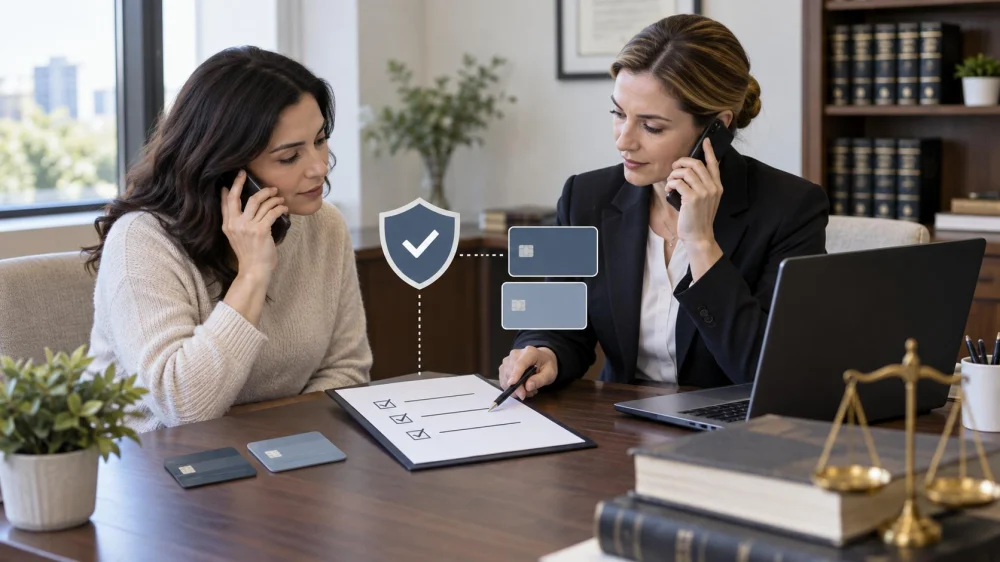
Law Firm Payment Change: Verify Before Sending Money
On this page
- Quick answer
- Treat any change as a verification event
- Use an independently sourced contact
- Confirm the complete transaction
- Recognize common warning signs
- Use simple payment controls
- Protect account and case information
- Verify receipt without exposing more data
- Act quickly after a suspected misdirection
- Limits and important notes
- Frequently asked questions
- Sources and evidence notes
- Conclusion and next steps
Quick answer
If law-firm payment instructions change, pause. Do not use the phone number, link, or reply address in the unexpected message. Contact the lawyer or billing office through a number you independently obtained from the engagement letter, prior verified records, or official website. Confirm the client matter, invoice, amount, payee, bank details, timing, and who authorized the change. Use a second person for large transfers, save the verification record, and contact the financial institution immediately if money was misdirected.

Law Offices of David Mamann / law offices of david mamann
Beverly HillsLos Angeles CountyCalifornia
291 S La Cienega Blvd # 214, Beverly Hills, CA 90211, USA
Treat any change as a verification event
Email accounts, phone numbers, invoices, and familiar conversation threads can be impersonated or compromised. Urgency, confidentiality, or accurate case details do not prove a payment request is genuine.
A new bank, routing number, payment portal, payee, mailing address, cryptocurrency wallet, gift-card request, or unusual split payment should trigger independent confirmation even when the amount was expected.

Hanlon Law Group P.C. / hanlon law group pc
Los AngelesLos Angeles CountyCalifornia
555 W 5th St 35th floor, Los Angeles, CA 90013, USA
Use an independently sourced contact
Call a known lawyer, billing employee, or office number from a trusted earlier record. Do not rely on contact information supplied in the changed request, and do not use the same email thread alone to verify itself.
If the office calls you, end the call and dial the trusted number back. For a large or unusual transfer, consider confirming through two established channels.
Confirm the complete transaction
- Client and matter name without sharing unnecessary confidential details.
- Invoice number, date, amount, and purpose.
- Payee legal name and account ownership.
- Bank, routing, account, portal, or mailing details.
- Whether the money is a fee, cost, settlement, retainer, or trust deposit.
- Who approved the change and when.
- How receipt will be acknowledged.
Recognize common warning signs
Pause for secrecy, pressure to act immediately, threats unrelated to the engagement, changed spelling or domain, new reply-to address, unusual attachments, requests to bypass normal approval, and payment by gift card, cryptocurrency, wire service, or payment app when that method was never agreed.
Do not click a portal link until its address is verified through the office. Open the known portal directly or use a saved trusted bookmark.
Use simple payment controls
- Require independent callback verification for every payment-detail change.
- Have a second authorized person review large transfers.
- Set bank transfer limits and alerts.
- Compare the confirmed payee with the bank's displayed recipient.
- Send a small test payment only if the law firm and bank agree it is appropriate.
- Record who verified what, through which channel, and when.
Protect account and case information
Share only the information needed to verify payment. Do not send passwords, one-time codes, full bank credentials, or identity documents through an unapproved channel. A legitimate office should not need remote control of your device to receive a payment.
Ask how the firm secures portals, invoices, stored payment methods, and trust-account communications. Report a suspicious message so the firm can warn affected people.
Verify receipt without exposing more data
Use the established office contact to confirm that funds arrived and were applied to the correct matter. Keep the invoice, authorization, bank confirmation, receipt, and verification notes together.
Review account activity and enable alerts. If payment status remains uncertain, do not send a duplicate merely because a message says the first transfer failed.
Act quickly after a suspected misdirection
Contact the sending bank or payment provider immediately and request its fraud or recall process. Then notify the verified law firm contact, preserve messages and transaction records, change compromised credentials, and follow appropriate reporting guidance.
Do not negotiate with the sender or delete evidence. Response options depend on method, timing, jurisdiction, contract, and financial institution.
Limits and important notes
This is general US fraud-prevention information, not legal, banking, tax, cybersecurity, or trust-account advice. Law-firm payment practices and professional rules vary by jurisdiction and matter.
Verification reduces risk but does not guarantee recovery or authenticity. For an active incident, promptly contact the financial institution, verified law firm, appropriate law enforcement or reporting agency, insurer, and qualified advisers.
Frequently asked questions
Is a reply in the same email thread safe?
Not by itself. A compromised account can preserve thread history. Verify through an independently sourced channel.
Should a law firm ask for gift cards or cryptocurrency?
Treat unfamiliar or pressured requests as high risk. Do not pay until independently verified, and note that the FTC identifies certain demanded payment methods as common scam signs.
What if the bank shows the correct payee name?
Continue full verification. Displayed names and matching tools have limits and do not replace confirmation with the office.
Sources and evidence notes
This article uses general payment-control and impersonation-scam principles. The US Federal Trade Commission advises avoiding unexpected links and warns about demands for payment by cryptocurrency, wire-transfer services, payment apps, or gift cards. Review the FTC's How to Avoid a Scam, then follow the financial institution's fraud process, the firm's verified instructions, and applicable professional rules.
Conclusion and next steps
Save trusted law-office and bank contacts before payment is due. When any instruction changes, stop and call back through an independent record. Confirm the whole transaction, use a second review for significant funds, and retain proof of both verification and receipt.





 Rowsey & Stelter, Attorneys at Law4.0 (11 reviews)
 Cook & James, LLC4.0 (100 reviews)
 Hobson & Hobson, P.C.3.0 (2 reviews)
 Witterman Law Group, LLC4.0 (3 reviews)
 Sean P. Collins PC4.0 (20 reviews)
 Swilling Family Law Firm, LLC4.0 (52 reviews)
 Court Filing Redaction: Review Identifiers Before Submission
 Law Firm Payment Change: Verify Before Sending Money
 Lawyer Client Portal: Verify Access Before Sharing Files
 Law Office Accessibility: Plan Communication and Entry
 Legal Service Change Order: Approve Scope and Cost in Writing
 Legal Service Completion Review: Test the Result Before Sign-Off