
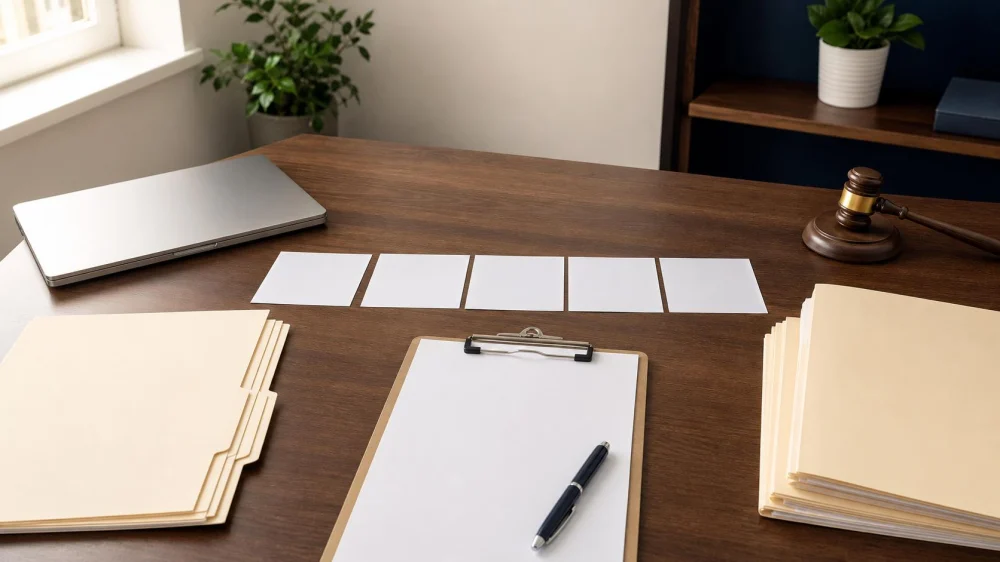
Small Claims Hearing Checklist: Prepare Your Case
On this page
Quick answer
Prepare for small claims court by reading the specific court's current instructions, confirming filing and service, identifying each fact you must prove, and arranging labelled copies of contracts, messages, photos, receipts and a damages calculation. Practice a short chronological explanation and plan for witness attendance. Do not assume rules, claim limits, evidence procedures or appeal rights are the same in every U.S. state or county.

Shouse Law Group Los Angeles Criminal Defense & DUI Lawyers / shouse law group reviews
Los AngelesLos Angeles CountyCalifornia
4419 Van Nuys Blvd #307, Sherman Oaks, CA 91403, USA
Verify the correct court and current rules
Small claims court is generally a simplified state or local court process for certain civil disputes below a jurisdiction-specific limit. Names, eligible claims and procedures vary.
- Confirm the court has authority over the type and amount of claim.
- Check venue: where the defendant resides, does business or where events occurred may matter.
- Verify the defendant's correct legal name and service address.
- Read rules for filing, service, counterclaims, interpreters, remote appearances and accommodations.
- Calendar every court-issued date and deadline exactly as written.
- Check whether pre-suit demand, mediation or another step is required.
Use the official state or local court website and clerk-provided forms. Court staff may explain procedure but generally cannot give legal advice.

Law Offices of David Mamann / law offices of david mamann
Beverly HillsLos Angeles CountyCalifornia
291 S La Cienega Blvd # 214, Beverly Hills, CA 90211, USA
Build a one-page case map
- Requested result: state the exact dollar amount or other relief the court may award.
- Legal basis: identify the claim or defense and its required elements using local instructions or legal guidance.
- Key facts: list the event timeline in date order.
- Proof: match each fact to a document, photograph, witness or admission.
- Damages: show how every amount was calculated and what was already paid or avoided.
- Weak point: prepare an honest answer to the strongest fact on the other side.
A compelling story is not enough if it does not address the required elements, and a stack of documents is not enough if the judge cannot connect them to the dispute.
Organize evidence for quick use
- Contracts, estimates, invoices, receipts and proof of payment.
- Messages and emails with dates, senders and sufficient context.
- Photographs labelled by date, location and what they show.
- Repair estimates, property records or other documents relevant to damages.
- A simple timeline and itemized damages worksheet.
- Witness information and any subpoena required under local rules.
- Proof of service and every document filed or received.
Keep originals protected and prepare the number of copies the court requires for the judge, opposing party and yourself. Do not edit screenshots in a way that removes context or authenticity information. Preserve original digital files.
Prepare a clear hearing presentation
- Write a 60- to 90-second opening: who, what happened, why the other party is responsible and the requested result.
- Select the few exhibits that prove each essential point.
- Practice explaining calculations without legal jargon.
- Prepare short, non-argumentative questions for witnesses.
- Anticipate the opposing party's documents and defenses.
- Plan to answer the judge directly and stop speaking when interrupted.
Best presentation: chronological, specific and tied to admissible proof. Not ideal: personal attacks, unrelated history, surprise recordings of uncertain legality or claims unsupported by a calculation.
Day-of checklist
- Confirm location, courtroom, remote link, parking or transit, security rules and start time.
- Bring identification, organized exhibits, copies, notes and court notices.
- Dress neatly and arrive early enough for screening.
- Silence devices and follow rules for electronics and recording.
- Address the judge respectfully and do not interrupt.
- Take notes on orders, deadlines and next steps.
- If settlement is discussed, understand terms before agreeing and put the complete agreement in the required form.
After the decision
A judgment does not always result in immediate payment. Procedures for notice, rehearing, appeal, collection, payment plans, judgment liens and exemptions vary. Read the written order and official court instructions promptly; deadlines may be short.
Keep proof of payment or satisfaction. Do not use self-help collection methods, harassment or property seizure outside lawful procedures.
When legal help is especially useful
- The other side has counsel or files a counterclaim.
- The dispute involves a business entity, government, out-of-state party or arbitration clause.
- Important evidence may require a subpoena or expert explanation.
- The limitations period, venue or defendant identity is uncertain.
- The case affects housing, licensing, immigration, employment or another major right.
- You need advice about settlement, appeal or collecting a judgment.
USAGov lists programs for free or lower-cost civil legal help at find affordable legal aid. Eligibility and available services vary.
Evidence and legal limitations
This article is general legal information, not legal advice or a statement of rules in any jurisdiction. Small claims courts are typically part of state systems, while federal courts have different jurisdiction and procedure. Always use the official instructions for the court named on your papers.
Frequently asked questions
How much can I sue for in small claims court?
The limit varies by jurisdiction and sometimes by claimant type or claim. Check the current official court rule rather than a national summary.
Can I bring screenshots?
Often they may be offered, but authentication and evidence rules vary. Preserve full conversations, dates, account context and original files.
Do I need a lawyer?
Some jurisdictions limit lawyer participation; others allow it. Even when self-representation is expected, limited legal advice can help.
What if my witness cannot attend?
Check local rules immediately. A written statement may not substitute for testimony, and a subpoena may require advance service and fees.
Can I appeal?
Appeal rights and which party may use them vary. Read the decision and official instructions promptly because deadlines can be short.
Next steps
Open the official court page for your case, verify rules and deadlines, then build a one-page map linking each required fact to proof. Prepare labelled copies, rehearse a concise timeline and identify issues that justify legal advice before the hearing.




 Eric S. Olson5.0 (6 reviews)
 Mednick Mezyk & Kredo Car Accident Lawyers5.0 (22 reviews)
 Jet Probate5.0 (2 reviews)
 Mayr Law Firm PC4.0 (147 reviews)
 Law Office of Patricia A. Rigdon3.0 (2 reviews)
 Nisar Law Group, P.C.5.0 (4 reviews)
 What to Know About Emerging AI Laws and How They Affect Your Business
 How to Expunge a Criminal Record and Start Fresh Legally
 Legal Tips for Dealing with Estate Taxes and Lifetime Gifting
 What to Know About Wage Theft: Employee Rights Under U.S. Labor Law
 Legal Tips for Volunteers Working Overseas Under U.S. Jurisdiction
 What to Know Legally About Employee Stock Purchase Plans (ESPP)